Does your living room look small?
8 quick questions, one minute. Get a spaciousness score and the cheapest fixes for your room.
How the test works
Rooms don't look small because of their square footage. They look small because of a handful of visual signals that tell your brain "this space ends here." Designers fix those signals first, before they touch the furniture budget. This test checks the eight most common ones and gives each a weight based on how much it changes the room.
You get a spaciousness score from 0 to 100. Higher is better. The score matters less than the list under it: the problems are sorted from the biggest effect to the smallest, and each one links to a step-by-step guide with prices.
What each result means
80–100: Looks bigger than it is
Your room is already doing most things right. Look at the one or two items flagged in your result — they're polish, not problems. A large mirror near the window or a tall plant in an empty corner is usually the last 10%.
50–79: A few fixes away
This is where most rentals land. Typically the curtains are hung on the window frame and the rug is one size too small. Fix those two and you'll gain a lot of visual space for under $100. Our curtain guide and rug size guide have the exact measurements.
0–49: Looks smaller than it is
Good news: low scores have the most room to improve, and the biggest fixes are often free. Pull the sofa off the wall, clear the walking path from the door, and clear every surface. Then switch every bulb to warm 2700K. Do those this weekend before buying anything, then follow our $200 makeover plan.
The 8 signals, explained
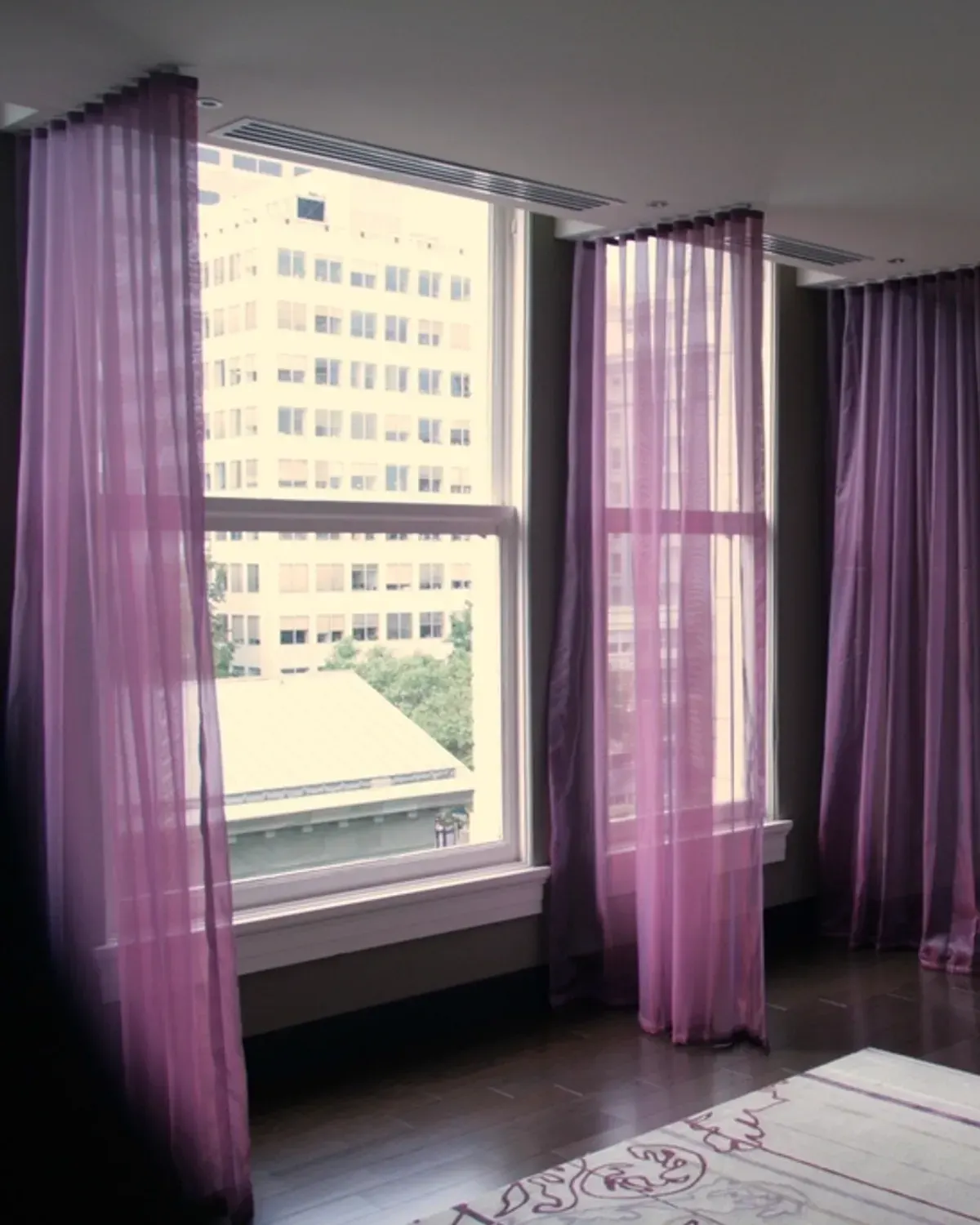
- Curtain height. A rod right on top of the frame "draws" a low ceiling. A rod near the ceiling, wider than the window, does the opposite.
- Rug size. A small rug floating in the middle chops the floor into pieces. The front legs of the furniture should sit on it.
- Furniture placement. Everything against the walls leaves an empty middle and makes the room feel like a hallway.
- Lighting. One cold ceiling light flattens the room and leaves the corners dark — and dark corners pull the walls in.
- Clutter. Every object on a surface is something the eye has to stop on. Empty surfaces read as space.
- Furniture on legs. When you can see the floor under a sofa or dresser, the room reads as bigger.
- Mirrors. One big mirror near a window doubles the light. Many small ones just add noise.
- Color contrast. When walls, curtains and big furniture share one color family, there are fewer edges and the room feels bigger.
Before you buy anything
Take a photo of your room from the doorway before you change anything, and another one after. Photos show clutter and awkward placement your eyes have learned to ignore. Then retake the test — most people gain 20 to 30 points with the free fixes alone.
Quick answers
Why does my living room look small even though it is not?
Usually because of a few visual mistakes: curtains hung right on the window frame, a rug that is too small, furniture pushed against every wall, cold overhead light and cluttered surfaces. Each one makes the eye stop early, so the room reads smaller.
What is the fastest way to make a living room look bigger?
Rehang the curtains high and wide and switch to warm 2700K bulbs with at least two lamps. Together they cost under $70 and change the room in an afternoon.
Is this quiz accurate?
It is a checklist of the most common visual tricks designers use, turned into a score. It cannot measure your room, but it reliably points to the cheapest fixes with the biggest effect.
Do I need to buy new furniture?
Almost never. Most fixes in the results are free (rearranging, clearing surfaces) or cost under $50 (bulbs, curtain rod, a bigger rug).